
MES and OEE: building trustworthy production measurements
How to define production events, validate OEE inputs and design a pilot line before scaling a manufacturing execution system.

An MES project is more than a dashboard
A manufacturing execution system connects work-order execution with machine and operator records. In a modern digitalisation project, the first decision is which events can be trusted under which conditions. Faster dashboards cannot resolve a stop that different shifts classify differently. Start with operational meaning, then design the screen.
Agree on the inputs before calculating OEE
OEE combines availability, performance and quality. Agree on planned production time, ideal cycle time, good units and rework. As a teaching example, availability of 0.90, performance of 0.95 and quality of 0.98 produce roughly 83.8%. This is an illustrative calculation, not a customer result or a target. Avoid ranking lines without understanding product mix and missing data.
Define the pilot data contract
Keep the work order, product, machine, shift, event time, source time and data quality together. A counter reset must not appear as a production loss, and delayed records must not count as new output. If operators select a reason code, make the list short enough for practical use. Specify how automatic signals and human explanations complement each other.
Test against operating conditions
Disconnect and reconnect the pilot, cross a shift boundary, change products and resend an event. Compare the report with physical counters over selected periods. Distinguish missing, estimated and verified observations on screen. Assign an owner and a correction process to every discrepancy rather than hiding gaps in a monthly total.
Prepare for the first workshop
Choose one line and bring a machine inventory, available PLC interfaces, a work-order example and current stop codes. Success should cover record completeness, delay, operator effort and report consistency, not only a higher OEE number. Establish a baseline before discussing improvement; a fixed efficiency uplift is not a credible starting commitment.
Scope with Nexus Core Studio
We approach MES together with PLC/SCADA, operator interfaces and ERP integration. A data dictionary, single-line pilot and written acceptance criteria provide a practical starting point. Rollout follows when data quality and operational responsibilities are clear.
Related services
Further reading: From PLC to software: secure data collection with OPC UA
Sources and scope
Sources checked: 30 October 2026. Implementation steps are general engineering guidance from Nexus Core Studio and should be validated for the organisation and operating environment.
The cover is an AI-generated illustrative scene, not a photograph of a customer project.
Frequently asked questions
Does MES replace ERP?
Usually not. ERP manages planning and business processes while MES follows execution on the shop floor. The project must define ownership and boundaries.
Does every machine need an automatic connection?
No. A pilot can begin with operator records if their origin, limitations and validation are clear. Automated collection can be added in stages.
Your next discovery.
All articles ↗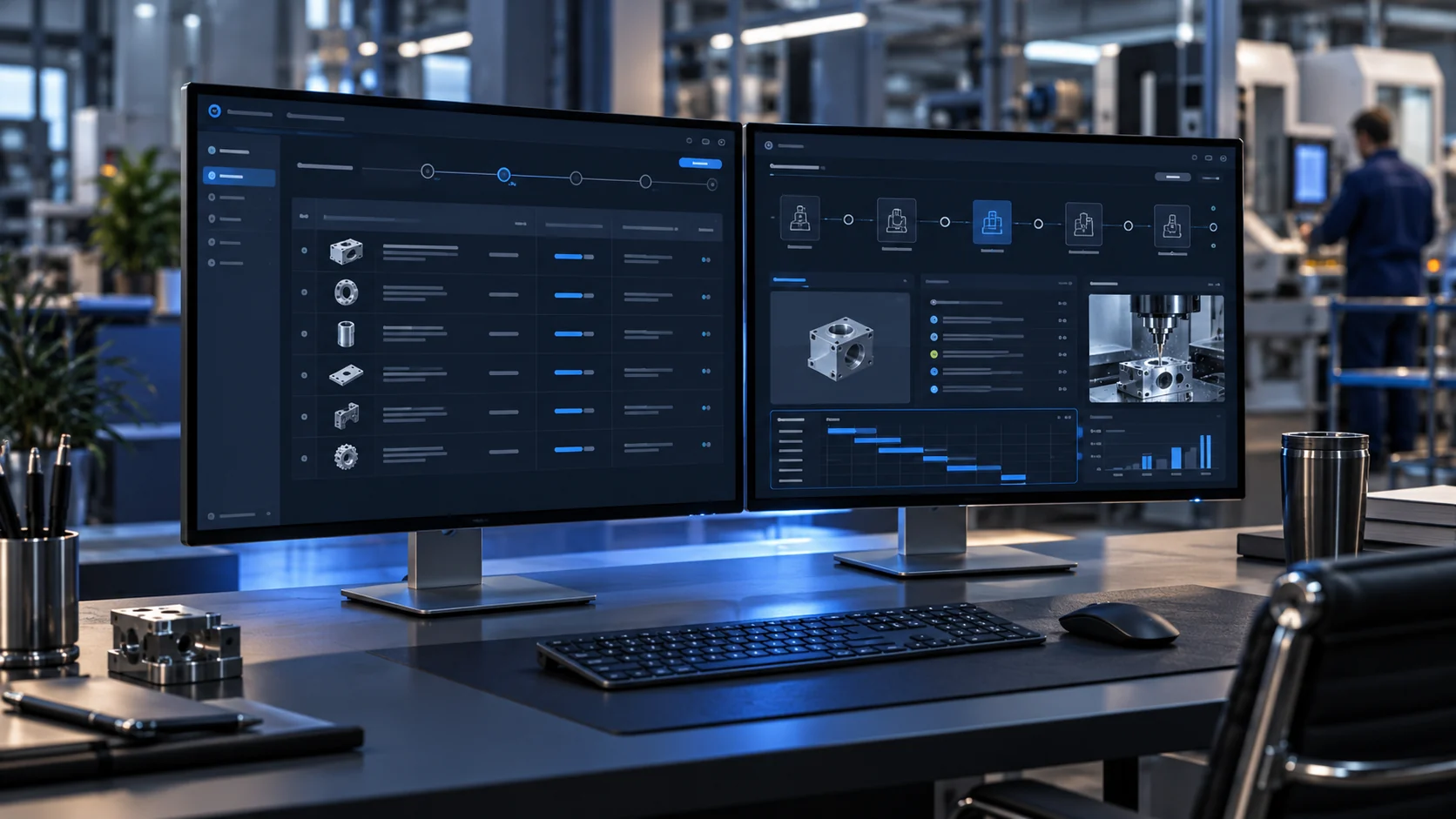
ERP–MES integration: preventing duplicate and missing transactions
Design reliable ERP and MES APIs with clear data ownership, transaction identifiers, controlled retries and reconciliation.

SEO, GEO and AEO in 2026: from useful content to measurement
Connect service content, evidence, technical SEO and Bing AI Performance when evaluating visibility for a B2B technology website.

Offline field applications: keep work moving when connectivity fails
Plan local storage, synchronisation, conflict resolution and device security for mobile field and warehouse applications.